
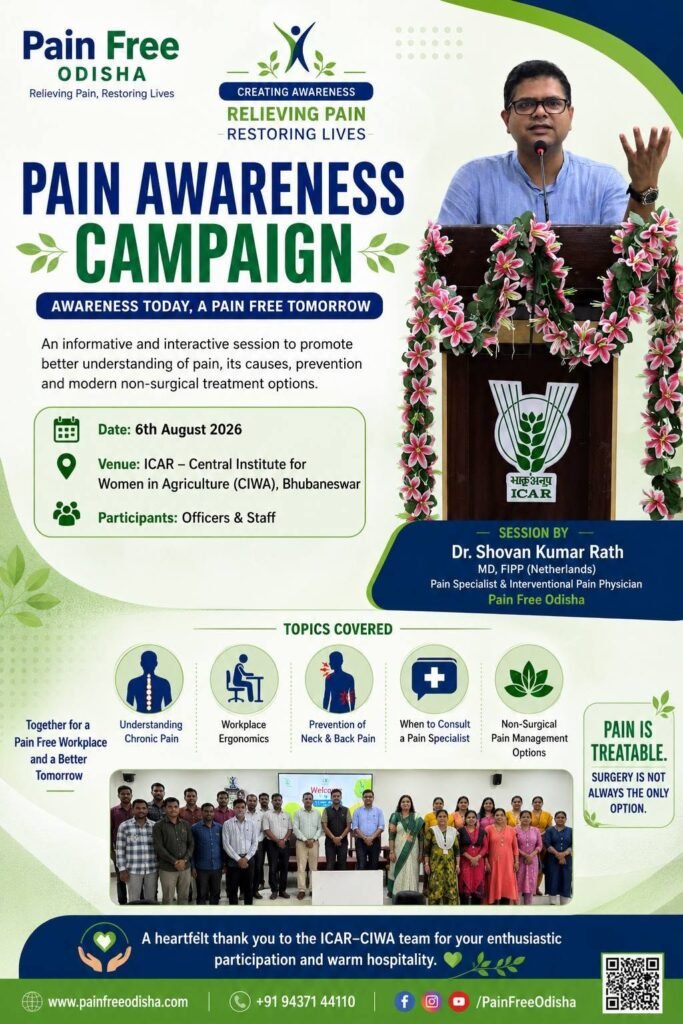
Pain Awareness Campaigns play an important role in educating people about common pain conditions, prevention, healthy lifestyle practices, and available treatment approaches. Better awareness can help individuals recognise persistent pain, understand possible contributing factors, and seek appropriate professional advice when required.
At Pain Free Odisha, we believe that creating awareness is an important step towards better pain care. With this objective, we were privileged to conduct a Pain Awareness Campaign for the officers and staff of ICAR–Central Institute for Women in Agriculture (ICAR-CIWA), Bhubaneswar, on 6th August.
The campaign focused on creating greater awareness about chronic pain and helping participants understand practical ways to prevent and manage common problems affecting the neck, back, and other areas of the body.
The interactive awareness session provided an opportunity for participants to discuss common pain-related concerns, understand factors that may contribute to pain, and learn why timely consultation with a qualified Pain Specialist can be important when symptoms persist.
Understanding the Im portance of a Pain Awareness Campaign
Pain is one of the most common health concerns experienced by people of different age groups and professions. While some pain may be temporary and improve with appropriate care, persistent or recurring pain can interfere with everyday activities and overall well-being.
A Pain Awareness Campaign helps people understand that persistent pain deserves appropriate attention. Awareness can encourage individuals to recognise symptoms, adopt healthier habits, and seek professional evaluation rather than continuing to live with pain without understanding its possible cause.
The campaign at ICAR-CIWA was designed to make pain awareness practical and relevant to everyday life. The discussion included common concerns related to the neck and back, workplace habits, posture, ergonomics, movement, and the importance of timely medical consultation.

Chronic Pain and Its Impact on Daily Life
Chronic pain can affect several aspects of a person’s daily routine. Persistent discomfort may interfere with work, mobility, sleep, concentration, exercise, and participation in normal activities.
For working professionals, recurring neck or back discomfort may become particularly challenging when daily responsibilities involve prolonged sitting, computer work, repetitive activities, or maintaining the same posture for extended periods.
One of the important messages shared during the Pain Awareness Campaign was that persistent pain should not simply be ignored. Understanding the possible cause and obtaining appropriate professional guidance can be an important part of responsible pain management.
Every person’s pain experience is different. Therefore, evaluation and treatment should be based on individual symptoms, medical history, clinical findings, and professional advice.
Preventing Neck and Back Pain
Neck and back pain are common concerns in modern workplaces. Long periods of sitting, computer-based work, limited movement, poor workstation setup, and prolonged static postures can contribute to discomfort in some individuals.
During the campaign, participants were encouraged to become more aware of their daily working habits and posture.
Simple workplace practices can support better musculoskeletal health. These may include:
- Maintaining a comfortable and appropriate sitting position.
- Adjusting the workstation to suit individual needs.
- Taking regular movement breaks during prolonged desk work.
- Avoiding remaining in the same posture for extended periods.
- Paying attention to posture while using computers and other devices.
- Incorporating appropriate physical activity into daily routines.
- Seeking professional advice when pain becomes persistent or interferes with daily activities.
These general measures are not a substitute for medical evaluation, but they can help promote greater awareness of healthy workplace habits.

Workplace Ergonomics and Pain Prevention
Workplace ergonomics was another important topic discussed during the Pain Awareness Campaign.
Ergonomics involves designing or adapting the work environment to support comfort, safety, and efficient working practices. For employees who spend several hours at desks or computers, awareness of workstation arrangement and posture can be especially useful.
An ergonomically aware workplace encourages employees to pay attention to how they sit, work, move, and use their equipment throughout the day.
Workplace ergonomics can include consideration of factors such as chair positioning, desk height, computer placement, screen position, and opportunities for regular movement. Small adjustments to working habits may help employees become more conscious of physical strain and prolonged static positions.
The goal is not to create a perfect posture that must be maintained continuously, but rather to encourage comfortable working positions and regular movement throughout the working day.
Importance of Timely Consultation with a Pain Specialist
Another key focus of the Pain Awareness Campaign was the importance of seeking professional guidance when pain persists or repeatedly returns.
Pain can have many possible causes. A proper evaluation can help a qualified healthcare professional understand the patient’s symptoms and determine whether further assessment or treatment is appropriate.
A Pain Specialist can evaluate an individual’s condition and discuss suitable management options based on the specific circumstances. Depending on the underlying problem, pain management may involve different approaches, which can include conservative care, rehabilitation, medication, lifestyle measures, or other clinically appropriate interventions.
There is no single treatment approach that is suitable for every patient. Personalised assessment is therefore an important part of responsible pain care.
Pain Is Treatable
One of the important messages shared during the campaign was simple:
Pain is treatable, and surgery is not always the only option.
Modern pain management includes a range of approaches that may be considered depending on the underlying condition and individual patient needs.
For some conditions, non-surgical approaches may be appropriate. For others, additional investigations or specialised treatment may be required. The most suitable approach can only be determined after appropriate professional assessment.
The objective of pain management is not simply to focus on reducing pain. Where possible, treatment also aims to support better function, mobility, daily activity, and quality of life.
Patients should discuss their symptoms and treatment options with a qualified healthcare professional rather than attempting to diagnose or treat persistent pain on their own.
Building a Pain-Aware Workplace
A healthy workplace is not only about productivity; it is also about creating awareness of employee well-being.
A Pain Awareness Campaign can help organisations provide employees with useful information about common pain concerns and encourage healthier workplace habits.
Awareness initiatives can focus on topics such as:
- Understanding common causes of neck and back discomfort.
- Recognising when pain may require professional attention.
- Improving awareness of workplace ergonomics.
- Encouraging regular movement during long periods of desk work.
- Understanding the importance of maintaining healthy daily habits.
- Learning about available pain management approaches.
- Encouraging timely consultation with qualified healthcare professionals.
By creating a more pain-aware workplace, organisations can encourage employees to take their health concerns seriously and seek appropriate guidance when needed.
Interactive Awareness Session at ICAR-CIWA
The Pain Awareness Campaign at ICAR-CIWA, Bhubaneswar, was an engaging opportunity to discuss common pain-related concerns in a workplace setting.
The enthusiastic participation of the officers and staff made the session meaningful and interactive. Participants had an opportunity to learn about chronic pain, discuss common concerns, and understand how everyday habits may influence musculoskeletal health.
The session also reinforced the importance of awareness and education in modern healthcare. When people have access to reliable information, they can become more aware of their symptoms and understand when professional evaluation may be appropriate.
Promoting Better Pain Care Through Awareness
Awareness is an important part of improving understanding about pain. People may sometimes consider persistent neck or back discomfort to be a normal consequence of work or age. However, recurring or persistent pain can affect quality of life and deserves appropriate attention.
Through initiatives such as the Pain Awareness Campaign, Pain Free Odisha aims to encourage people to become more informed about pain and its management.
Education does not mean that every individual requires medical treatment. Rather, it helps people understand the importance of recognising symptoms, adopting healthy habits, and seeking professional advice when necessary.
This approach supports informed decision-making and encourages people to take an active role in their health.
Our Commitment to Pain Awareness
At Pain Free Odisha, we remain committed to creating greater awareness about pain and modern approaches to pain management.
Health awareness programmes provide an opportunity to connect healthcare knowledge with the everyday concerns of the community. By conducting educational sessions in workplaces and other community settings, we aim to encourage people to understand their pain and seek appropriate professional guidance.
The Pain Awareness Campaign at ICAR-CIWA was another meaningful step towards spreading awareness about chronic pain, workplace ergonomics, prevention, and timely consultation.
We extend our heartfelt thanks to the ICAR-CIWA team for their enthusiastic participation and warm hospitality. Their support helped make the awareness session an engaging and valuable experience.
Conclusion
The Pain Awareness Campaign at ICAR-CIWA, Bhubaneswar, focused on an important message: understanding pain is an essential part of taking better care of one’s health.
The session highlighted chronic pain awareness, neck and back pain prevention, workplace ergonomics, healthy movement habits, and the importance of timely consultation with a qualified Pain Specialist.
Persistent pain should not always be accepted as a normal part of life. Understanding the possible cause and seeking appropriate professional guidance can help individuals explore suitable management options.
Through continued education and awareness, we can work towards building healthier and more informed communities.
Creating Awareness. Relieving Pain. Restoring Lives.
Mission Pain Free Odisha
Your Pain, Our Priority.
