
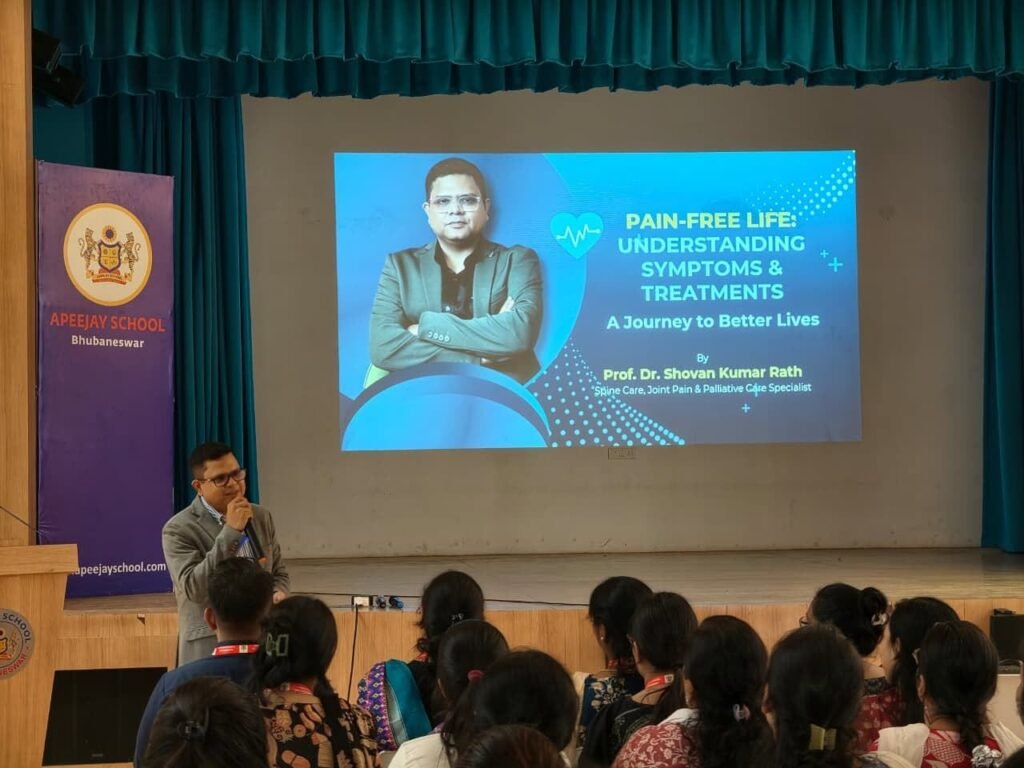
Interventional Pain Management is an important area of modern healthcare that focuses on evaluating and managing persistent or complex pain through targeted treatment approaches. To create greater awareness about modern pain care, an insightful health awareness session was organised at our auditorium, led by renowned specialist Dr. Shovan Kumar Rath from Pain Free Odisha – Interventional Pain Management Center.
The session provided an opportunity for the community to learn about chronic pain, modern treatment approaches and the role of Interventional Pain Management in appropriate patients. Dr. Rath shared valuable insights into how targeted techniques may help manage pain while supporting patients in their journey towards improved comfort, mobility and quality of life.
Understanding Chronic Pain
Chronic pain is pain that persists for an extended period and can affect a person’s everyday activities, movement, sleep and overall well-being. Unlike short-term pain associated with an injury or temporary condition, persistent pain may require a detailed evaluation to understand its contributing factors.
During the awareness session, emphasis was placed on the importance of understanding the underlying cause of pain rather than simply ignoring persistent symptoms. Proper professional evaluation can help determine the nature of the pain and identify appropriate management options based on an individual’s condition.
Early attention to persistent pain can also help patients understand their available treatment options and make informed decisions in consultation with qualified healthcare professionals.
What Is Interventional Pain Management?
Interventional Pain Management involves specialised procedures and targeted techniques that may be used to evaluate or manage certain types of pain. Depending on the patient’s condition, these approaches can focus treatment closer to the suspected source of pain.
Interventional pain care is generally considered as part of a broader treatment plan. The suitability of any procedure depends on factors such as the patient’s symptoms, clinical findings, medical history and professional assessment.
The session highlighted how modern pain management continues to evolve, providing healthcare professionals and patients with greater awareness of different approaches to chronic pain care.
Targeted Approach to Pain Relief
One of the important concepts discussed during the session was targeted pain management. When appropriate, interventional techniques may allow treatment to be directed towards a specific area associated with pain.
A targeted approach can be useful in selected cases where conventional management alone may not provide adequate relief. However, treatment decisions should always be individualised following proper clinical evaluation.
The objective of Interventional Pain Management is not simply to address pain symptoms but to develop an appropriate management strategy based on the patient’s specific needs and condition.
Minimally Invasive Pain Management Approaches
Modern Interventional Pain Management may include minimally invasive procedures for appropriately selected patients. These procedures are designed to access specific areas while generally avoiding the larger incisions associated with conventional surgery.
The health awareness session highlighted the role of minimally invasive approaches as potential options for selected patients. Whether a particular procedure is suitable depends on the diagnosis, severity of symptoms, previous treatments and overall clinical assessment.
It is important for patients to understand that minimally invasive does not mean risk-free or suitable for everyone. A qualified pain specialist should assess the individual situation before recommending any procedure.
Potential Benefits of Interventional Pain Management
Depending on the underlying condition and treatment selected, interventional pain procedures may provide several potential benefits for appropriate patients.
Targeted Treatment
Interventional techniques can be designed to focus treatment on a particular area associated with pain. This targeted approach may be useful when the source or contributing structures can be identified through clinical assessment.
Minimally Invasive Options
Certain procedures use minimally invasive techniques and may provide an option for selected patients when compared with more invasive surgical approaches.
Supporting Mobility
When pain is appropriately managed, some patients may find it easier to participate in daily activities and movement. Improved comfort can contribute to an individual’s overall rehabilitation and functional goals.
Quality of Life
Persistent pain can affect many aspects of everyday life. Appropriate pain management may help eligible patients work towards improved comfort, activity and overall quality of life.
These potential benefits vary from person to person, and treatment outcomes depend on the underlying condition and individual circumstances.
The Importance of Professional Pain Evaluation
A key message from the awareness session was that persistent pain should not simply be ignored. Pain can have different causes, and identifying the contributing factors is an important part of developing an appropriate management plan.
A professional evaluation may involve discussion of symptoms, medical history, physical examination and, when clinically appropriate, diagnostic investigations. Based on the assessment, healthcare professionals can discuss suitable treatment options with the patient.
Seeking professional advice is particularly important when pain persists, repeatedly returns or begins to interfere with normal daily activities.
A Patient-Centred Approach to Pain Care
Effective chronic pain care should consider the individual patient rather than relying on a single treatment approach. Depending on the condition, pain management may involve medication, physical rehabilitation, lifestyle measures, psychological support, interventional procedures or other appropriate approaches.
Interventional Pain Management can therefore be one component of a comprehensive pain management plan. The treatment approach should be selected according to the patient’s diagnosis, symptoms, goals and clinical requirements.
Patient education also plays an important role. Understanding the condition and available treatment options can help patients have more meaningful conversations with their healthcare providers.
Health Awareness Session with Dr. Shovan Kumar Rath
The awareness session led by Dr. Shovan Kumar Rath provided valuable information about advances in modern pain care. His discussion helped participants understand the importance of recognising persistent pain and seeking appropriate professional evaluation.
The session also created an opportunity for the community to learn about modern approaches to chronic pain management and understand how interventional techniques may form part of treatment for appropriately selected patients.
Such health awareness programmes can play an important role in improving public understanding of pain conditions and encouraging people to seek professional guidance when persistent pain affects their daily lives.
Advancing Chronic Pain Care
The field of Interventional Pain Management continues to develop as healthcare professionals explore improved ways to evaluate and manage complex pain conditions. Education, clinical expertise and appropriate patient selection remain important components of responsible pain care.
Awareness sessions can help bridge the gap between advances in healthcare and public understanding. By learning more about modern pain management, individuals can become better informed about when to seek professional advice and what types of treatment may be discussed during a clinical consultation.
The ultimate goal of pain care is to support patients in achieving better function, comfort and quality of life through an appropriate and personalised management strategy.
Conclusion
The health awareness session on Interventional Pain Management, led by Dr. Shovan Kumar Rath from Pain Free Odisha – Interventional Pain Management Center, was an informative initiative focused on increasing awareness about chronic pain and modern approaches to its management.
The session highlighted the importance of targeted treatment, minimally invasive approaches, professional evaluation and patient-centred care. It also reinforced an important message: persistent pain deserves appropriate attention and should be evaluated by a qualified healthcare professional.
Through continued education and awareness, communities can develop a better understanding of chronic pain and the evolving options available for its management.
Your Pain, Our Priority.
