
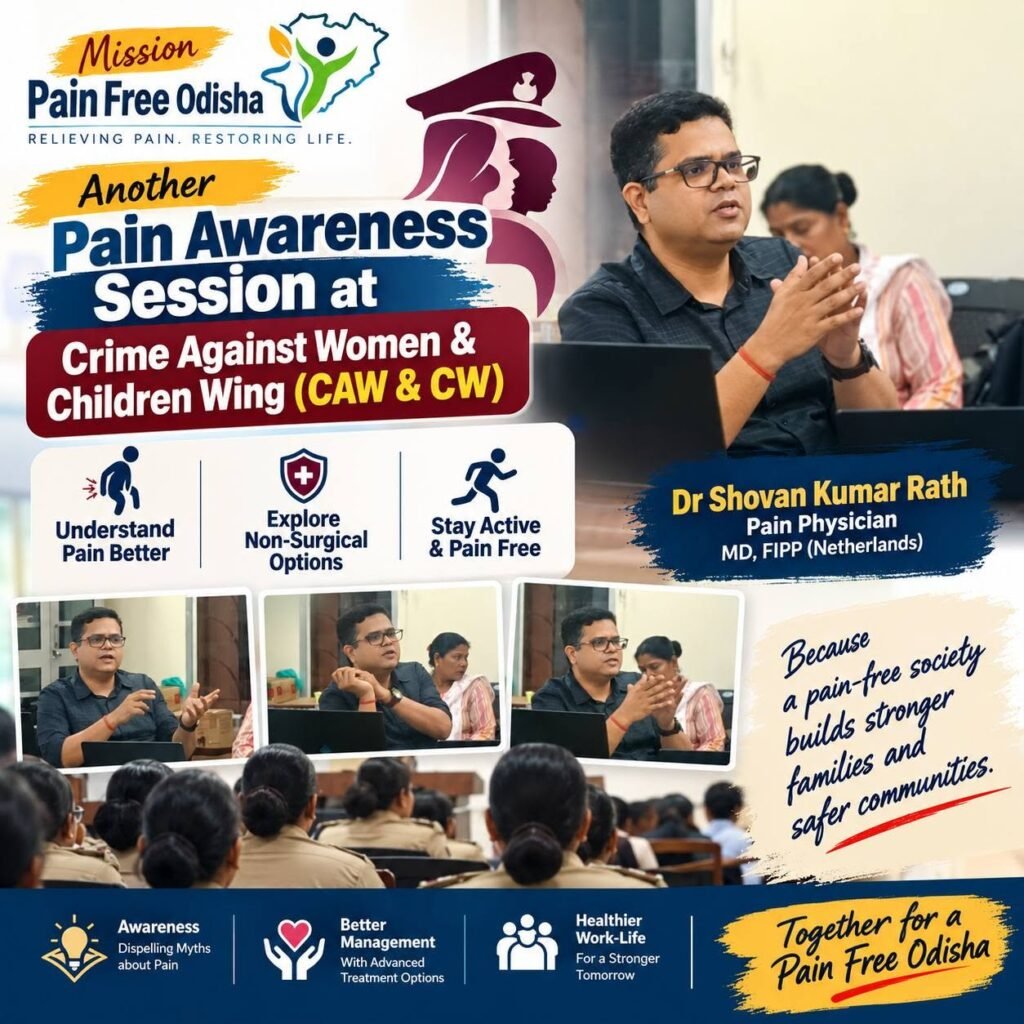
Pain Awareness Session at CAW & CW Bhubaneswar: Advancing the Mission Pain Free Odisha
Pain awareness is an important step towards better health, timely care and improved quality of life. As part of its continued commitment to public education, Pain Free Odisha highlights the importance of understanding pain, learning about appropriate pain management and becoming aware of treatment options that may be available after professional medical evaluation.
A meaningful Pain Awareness Session was conducted at the Crime Against Women & Children Wing (CAW & CW), supporting the wider mission of spreading knowledge about pain and encouraging informed conversations around healthcare.
The initiative reflects a simple but important message: people should understand persistent pain, recognise when professional guidance may be needed and learn that treatment approaches can vary depending on the cause and individual clinical condition.
With the guiding message “Relieving Pain. Restoring Life.”, Pain Free Odisha continues to promote awareness and contribute to the goal of building a more informed, compassionate and pain-aware society.
Pain Awareness Session at CAW & CW Bhubaneswar
The Pain Awareness Session at the Crime Against Women & Children Wing was an opportunity to highlight the importance of pain education in a professional and community setting.
Pain can affect movement, sleep, concentration, work and everyday activities. However, people may not always know how to respond when pain persists or repeatedly returns. Some may ignore symptoms, while others may be uncertain about which healthcare professional to consult or what treatment options to discuss.
Pain awareness sessions help address these information gaps by encouraging people to learn about common pain concerns, understand the value of medical assessment and make informed decisions about their health.
The session at CAW & CW formed part of the broader message of Mission Pain Free Odisha: spreading awareness so that people can better understand pain and seek appropriate care when needed.
Why Pain Awareness Matters
Pain is a common experience, but persistent or recurring pain should not automatically be treated as something that must simply be endured. Its significance depends on factors such as its cause, duration, severity and effect on daily life.
Pain awareness helps people recognise that pain can arise from different sources, including muscles, joints, nerves, injuries and certain long-term medical conditions. Understanding these differences is important because treatment that may be appropriate for one condition may not be suitable for another.
Awareness also encourages people to describe their symptoms clearly when consulting a healthcare professional. Details such as when the pain started, where it occurs, what makes it worse and whether it affects movement can help guide clinical assessment.
The purpose of pain education is not to encourage self-diagnosis. Rather, it is to help individuals understand their symptoms, recognise the value of professional advice and become active participants in their healthcare decisions.
Understanding Common Pain Conditions
Pain may appear in different parts of the body and can have a variety of causes. Learning about common pain conditions is one way to encourage earlier and more appropriate conversations with healthcare professionals.
Back and neck pain: These symptoms can be associated with muscle strain, posture, spinal conditions or other causes. Persistent pain, pain following an injury or symptoms that interfere with normal activity may need professional assessment.
Joint pain: Pain affecting the knees, shoulders, hips or other joints can have several causes, including injury, inflammation and degenerative conditions. The appropriate management approach depends on the diagnosis and the individual’s needs.
Nerve-related pain: Some people experience burning, tingling, shooting or electric-shock-like sensations. These symptoms can sometimes be associated with nerve involvement and should be assessed when persistent, worsening or accompanied by other concerning changes.
Chronic pain: Pain that continues or repeatedly occurs over an extended period can affect sleep, mood, mobility and daily responsibilities. A healthcare professional can assess possible causes and discuss an appropriate management plan.
These examples are intended for general awareness. Symptoms alone cannot confirm a diagnosis, and people should seek qualified medical advice when pain is persistent, severe or concerning.
Exploring Non-Surgical Pain Management Options
One of the important messages behind pain awareness is that non-surgical treatment options may be appropriate for some pain conditions, depending on the diagnosis and clinical assessment.
Pain management is not a single treatment that works the same way for everyone. It may involve a combination of approaches selected according to the individual’s symptoms, medical history, examination findings and treatment goals.
Depending on the condition, a healthcare professional may discuss options such as:
- Medication: Selected medicines may be used when clinically appropriate, with consideration of potential benefits, risks and interactions.
- Physiotherapy and rehabilitation: Guided movement, strengthening and rehabilitation may help some people improve function and manage particular musculoskeletal conditions.
- Lifestyle and posture adjustments: Changes to daily activity, work habits and posture may be useful in selected cases.
- Interventional pain management: Certain procedures may be considered for specific conditions after appropriate evaluation.
- Ongoing clinical review: Follow-up helps assess progress and determine whether the management plan needs adjustment.
Non-surgical care is not suitable for every condition, and it should not be viewed as a guarantee that surgery will never be required. The goal is to help people understand the available approaches and discuss the most appropriate options with qualified healthcare professionals.
The Role of Pain Education in the Workplace
Workplaces and professional institutions can provide useful opportunities for health education. People may spend long periods sitting, standing, driving or performing repetitive activities, and these demands can contribute to discomfort in some circumstances.
Pain awareness encourages individuals to pay attention to their bodies, maintain appropriate movement breaks where possible and seek advice when symptoms persist.
Helpful general habits may include adjusting workstation arrangements, avoiding prolonged positions when practical, using safe lifting techniques and following suitable physical activity recommendations. These steps do not prevent every cause of pain, but they can support a more informed approach to everyday wellbeing.
Professional awareness sessions also provide an opportunity to challenge misconceptions. Pain should not be dismissed simply because it is not visible, and individuals should feel encouraged to seek appropriate guidance without relying on unverified remedies or advice.
The CAW & CW awareness initiative reflects the value of bringing health education into institutional settings and encouraging people to discuss pain more confidently.
Recognising When Medical Advice Is Important
Pain awareness also means understanding when symptoms should be assessed promptly.
People should consider seeking medical advice if pain persists, repeatedly returns, worsens over time or begins to interfere with normal movement, sleep or daily responsibilities.
Certain symptoms require urgent assessment. These may include severe pain after a significant injury, new or progressive weakness, loss of bladder or bowel control, numbness around the groin or saddle area, or pain accompanied by other serious symptoms. Sudden or severe symptoms should not be delayed while waiting for an awareness session or routine appointment.
It is important not to assume that every pain symptom has the same cause. Appropriate evaluation helps determine whether further investigations, medication, rehabilitation, specialist review or another form of care is needed.
By promoting informed awareness, initiatives such as this session can encourage people to seek help at the right time rather than ignoring symptoms or attempting to manage complex conditions without guidance.
Pain Free Odisha: Creating Awareness Beyond the Clinic
The mission of Pain Free Odisha extends beyond clinical pain management to include public awareness and education about persistent pain and available approaches to care.
The organisation’s website describes its focus on pain management, including difficult chronic pain conditions, and its efforts to increase awareness among people and healthcare professionals in Odisha. These education-focused activities help bring conversations about pain into workplaces, institutions and community settings.
Awareness is particularly valuable when people have limited information about the different causes of pain or are unfamiliar with the range of approaches that a qualified clinician may consider.
By explaining pain in accessible language, educational sessions can help people ask better questions, understand the importance of clinical assessment and become more informed about their care.
Every session is an opportunity to reinforce the idea that pain deserves attention and that appropriate support should be based on individual needs and reliable medical guidance.
Building a More Pain-Aware Odisha
A pain-aware society begins with knowledge, open communication and access to reliable information. Healthcare professionals, institutions, workplaces and community organisations can all contribute to this goal.
Public awareness initiatives can help people recognise persistent symptoms, understand the importance of professional evaluation and learn about responsible pain management. They can also encourage a more compassionate attitude towards people living with chronic pain.
For some individuals, pain affects not only physical comfort but also family life, employment, sleep and social participation. Listening to their concerns and helping them access appropriate care are important parts of a patient-centred approach.
Mission Pain Free Odisha aims to keep these conversations moving forward through awareness and education. The goal is not to promise that every condition can be eliminated, but to encourage better understanding, appropriate care and more informed decisions about pain.
The Pain Awareness Session at CAW & CW represents this wider commitment to helping people understand pain and the importance of seeking reliable guidance.
Conclusion: Relieving Pain. Restoring Life.
The Pain Awareness Session at the Crime Against Women & Children Wing (CAW & CW) was a meaningful opportunity to promote better understanding of pain, responsible management and non-surgical treatment options where clinically appropriate.
Pain awareness helps people recognise symptoms, understand the value of professional medical assessment and learn that different conditions may require different treatment approaches. It also reinforces the importance of reliable information, timely guidance and individualised care.
Through continuing awareness initiatives, Pain Free Odisha remains committed to spreading knowledge and encouraging constructive conversations about pain management across Odisha.
Together, we can work towards a society where pain is better understood, people feel encouraged to seek appropriate care, and healthcare decisions are guided by reliable information.
Mission Pain Free Odisha
Relieving Pain. Restoring Life.
Medical disclaimer: This article is intended for general educational awareness and is not a substitute for professional medical advice, diagnosis or treatment. Treatment suitability should be determined by a qualified healthcare professional.
