
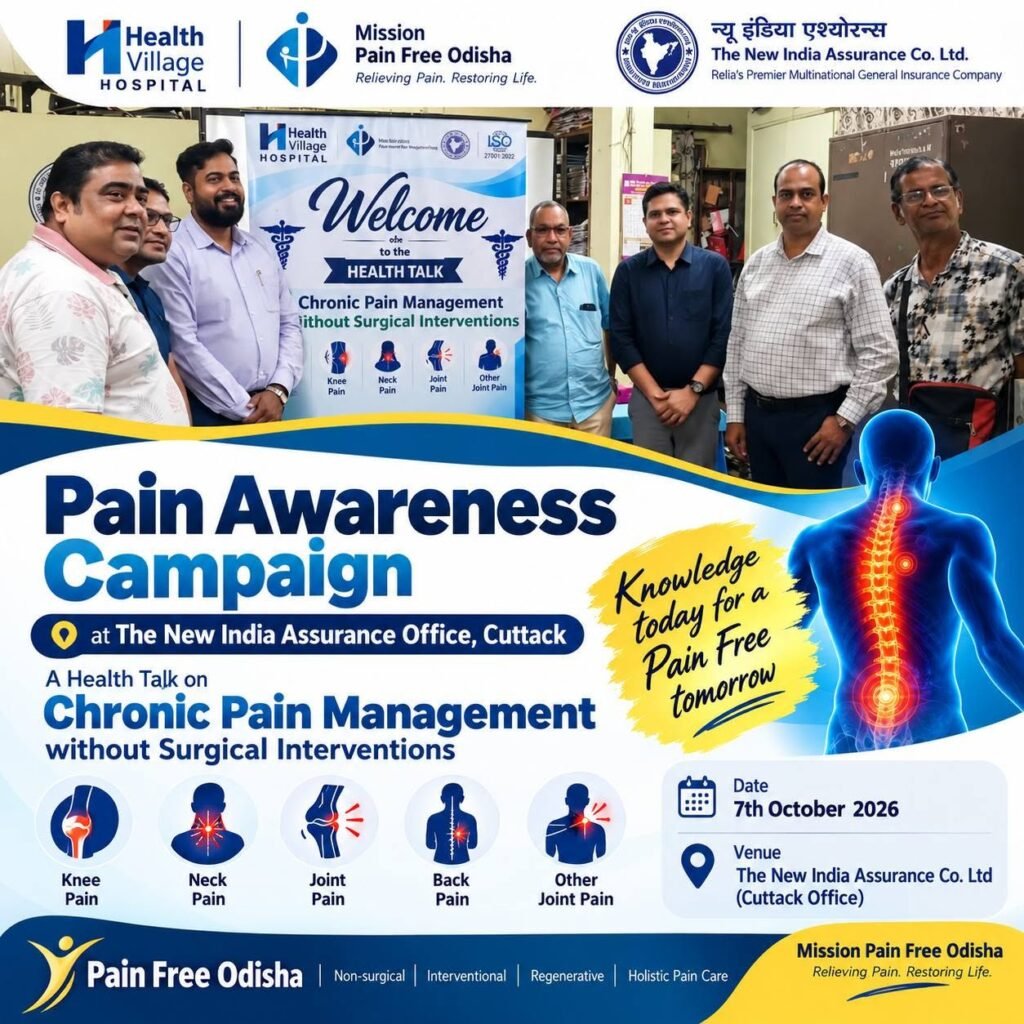
Pain Awareness Campaign at New India Assurance Cuttack: Mission Pain Free Odisha
Creating awareness about pain is an important step towards improving health, encouraging timely medical guidance and helping people make informed decisions about their well-being. As part of its continued commitment to public education, Pain Free Odisha conducted a Pain Awareness Campaign at The New India Assurance Co. Ltd., Cuttack, focusing on chronic pain management and non-surgical treatment options.
The initiative was another meaningful step under Mission Pain Free Odisha, with the aim of spreading knowledge, addressing common misconceptions about pain and encouraging people to explore appropriate healthcare options.
The campaign also highlighted the importance of understanding chronic pain, recognising its impact on everyday life and seeking professional advice when symptoms persist. With the support and participation of the New India Assurance team, the programme helped bring attention to an important healthcare topic in a workplace setting.
The message behind the initiative remains simple:
“Together, let’s make Odisha Pain Free!”
Pain Awareness Campaign at New India Assurance Cuttack
The Pain Awareness Campaign at New India Assurance in Cuttack was organised to encourage a better understanding of chronic pain and its management.
Pain is something many people experience during their lives. While short-term pain may occur after an injury or illness, persistent pain can affect daily activities, sleep, mobility, concentration and overall quality of life.
People living with chronic pain may sometimes consider it an unavoidable part of ageing, work or everyday responsibilities. Others may be uncertain about which healthcare professional to consult or what treatment options are available.
Awareness initiatives help address these concerns by providing accessible information and encouraging individuals to seek appropriate medical evaluation.
The campaign at The New India Assurance Co. Ltd. focused on three important areas:
- Understanding chronic pain and its possible effects on daily life.
- Learning about responsible pain management and available treatment approaches.
- Increasing awareness of non-surgical options that may be suitable for selected conditions.
The programme reflects the wider goal of Mission Pain Free Odisha: helping people become more informed about pain and the importance of appropriate care.
Why Chronic Pain Awareness Is Important
Chronic pain is generally understood as pain that continues or recurs for an extended period, often beyond the expected healing time. It can be associated with different medical conditions and may affect people in different ways.
Unlike temporary discomfort, persistent pain can influence several aspects of life. It may make everyday activities difficult, affect sleep, reduce physical activity and create challenges at work or at home.
Common examples of conditions associated with persistent pain include:
Chronic back pain: Ongoing back discomfort may have several causes, including muscular, spinal or other medical conditions. Proper assessment helps determine the appropriate management approach.
Neck and shoulder pain: Prolonged discomfort can affect movement and routine activities. A clinical evaluation may help identify possible contributing factors.
Joint pain: Conditions affecting the knees, hips, shoulders and other joints may cause pain and stiffness. Treatment depends on the underlying cause and individual needs.
Nerve-related pain: Burning, tingling, shooting or electric-shock-like sensations may sometimes indicate nerve involvement and should be evaluated when persistent or worsening.
Headache and facial pain: Recurrent headaches or facial pain can have different causes and may require specific assessment and management.
Understanding these conditions is important because pain is not a diagnosis by itself. Identifying its underlying cause is an essential part of deciding what care may be appropriate.
Understanding Non-Surgical Pain Management Options
One of the key topics highlighted by the campaign was the importance of understanding non-surgical treatment options.
Surgery is an important medical intervention when clinically necessary, but it is not the only approach used in every pain condition. Depending on the diagnosis, some people may be suitable for non-surgical pain management.
The treatment plan should always be based on an individual’s medical history, symptoms, examination and relevant investigations.
Some approaches that healthcare professionals may consider include:
1. Medication-Based Management
Certain medicines may help manage specific types of pain. Their suitability depends on the condition, other health factors and possible side effects. Medication should be used according to professional medical advice rather than through self-prescription.
2. Physiotherapy and Rehabilitation
Guided exercises and rehabilitation may help selected patients improve strength, flexibility, movement and physical function. A suitable programme should be planned according to the individual’s condition and abilities.
3. Lifestyle and Activity Modification
Daily habits can influence physical comfort. Depending on the person’s circumstances, healthcare professionals may recommend appropriate activity levels, movement breaks, posture adjustments and gradual physical conditioning.
4. Interventional Pain Management
For selected conditions, specialist pain physicians may consider minimally invasive or image-guided procedures. These treatments are not appropriate for everyone, and their potential benefits and risks should be discussed following clinical evaluation.
5. Multidisciplinary Pain Care
Some persistent pain conditions benefit from a coordinated approach involving different healthcare professionals. Depending on individual needs, care may include medical treatment, rehabilitation and support for the wider effects of living with pain.
The purpose of discussing non-surgical options is to improve awareness, not to suggest that surgery is never needed. Every treatment decision should be made with a qualified healthcare professional.
Breaking Common Myths About Chronic Pain
Misconceptions about pain can sometimes prevent people from seeking appropriate help. Public awareness campaigns provide an opportunity to discuss these misunderstandings and encourage evidence-informed decisions.
Myth 1: Persistent pain must simply be tolerated.
Fact: Persistent pain deserves attention. A healthcare professional can assess possible causes and discuss suitable management options.
Myth 2: Surgery is the only solution for every serious pain condition.
Fact: Depending on the diagnosis, some conditions may be managed through medication, rehabilitation, lifestyle changes or selected interventional approaches. Other conditions may require surgery.
Myth 3: Pain is always visible.
Fact: Pain is a personal experience and may not always be apparent to others. A person’s symptoms should be taken seriously and assessed appropriately.
Myth 4: Everyone with the same pain needs the same treatment.
Fact: The causes and effects of pain vary. Treatment should be individualised according to clinical findings and patient needs.
Myth 5: Taking more pain medicine always provides better relief.
Fact: Medicines have specific indications, dosage limits and potential risks. Taking additional medication without medical guidance can be harmful.
Sharing accurate information helps people move beyond assumptions and make better-informed healthcare decisions.

The Importance of Workplace Pain Awareness
Workplaces are valuable settings for health education because employees may spend many hours performing similar tasks, sitting at desks, standing, travelling or carrying out physically demanding activities.
These activities do not necessarily cause chronic pain, but certain working patterns may contribute to discomfort in some individuals.
Workplace awareness can encourage people to pay attention to their physical well-being and seek advice when symptoms persist.
Some general practices that may support everyday physical health include:
- Taking suitable movement breaks during long periods of sitting.
- Maintaining a comfortable workstation arrangement.
- Using safe techniques when lifting or moving objects.
- Following appropriate physical activity and exercise guidance.
- Seeking medical advice for persistent or worsening symptoms.
These habits are not a substitute for diagnosis or treatment. They are general awareness measures that may support healthier daily routines.
The campaign at The New India Assurance Co. Ltd., Cuttack, reflects the value of taking health education into professional environments and making important healthcare information more accessible.
Pain Free Odisha: A Mission of Awareness and Care
Pain Free Odisha works towards spreading awareness about pain management and encouraging people to understand the care options that may be available for different pain conditions.
The mission goes beyond discussing treatment alone. Public education is an important part of helping individuals recognise persistent symptoms, understand the value of professional evaluation and ask informed questions about their healthcare.
Awareness campaigns at institutions and workplaces provide opportunities to share this message with different groups of people.
By discussing chronic pain and non-surgical treatment options, Pain Free Odisha aims to encourage informed conversations and reduce misunderstandings surrounding pain management.
The guiding message, “Relieving Pain. Restoring Life.”, reflects the importance of recognising how pain can affect everyday living and supporting people in finding appropriate medical guidance.
New India Assurance Team: Appreciation for Support
The success of an awareness initiative depends on the participation and cooperation of the people and institutions involved.
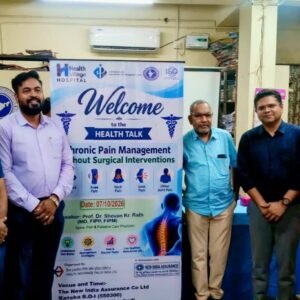
Heartfelt thanks are extended to the The New India Assurance Co. Ltd. team for their support and participation in the Pain Awareness Campaign at Cuttack.
The organisation’s cooperation provided an opportunity to share information about chronic pain management and encourage conversations around non-surgical treatment options.
Institutional participation in health awareness activities can help make healthcare education a shared responsibility. When workplaces support such initiatives, they contribute to an environment where employees can learn more about health and well-being.
The campaign also demonstrates how collaboration between healthcare awareness initiatives and professional organisations can help take important health messages beyond traditional clinical settings.
Building a Pain-Aware Odisha Through Collective Effort
Building a more pain-aware society requires continued education, communication and cooperation.
Individuals need access to reliable information so they can recognise when symptoms require medical attention. Healthcare professionals can help by explaining diagnoses and discussing treatment options in language people understand. Institutions and workplaces can support awareness by providing opportunities for health education.
Community campaigns also help create a more compassionate approach towards people living with chronic pain. Their experiences should be understood rather than dismissed, and they should be encouraged to seek appropriate care.
The Pain Awareness Campaign at New India Assurance, Cuttack, represents another step in this direction.
Every awareness initiative can help someone learn something important: persistent pain should not be ignored, treatment decisions should be based on professional evaluation, and non-surgical approaches may be suitable for selected conditions.
The wider mission is to encourage people across Odisha to become more informed about pain and take responsible steps towards their health.
Conclusion: Together, Let’s Make Odisha Pain Free!
The Pain Awareness Campaign at The New India Assurance Co. Ltd., Cuttack, was another meaningful initiative under Mission Pain Free Odisha.
By focusing on chronic pain management, non-surgical treatment options and the importance of accurate health information, the campaign helped reinforce the value of pain awareness in everyday life.
Sincere appreciation goes to the New India Assurance team for their support and participation. Their cooperation helped create an opportunity to discuss an important healthcare subject in a professional setting.
Pain awareness is a continuing journey. Through education, responsible healthcare decisions and collaboration, communities can become better informed and more supportive of people living with pain.
Mission Pain Free Odisha
Relieving Pain. Restoring Life.
Together, let’s make Odisha Pain Free!
Medical disclaimer: This article is intended for general educational purposes only. It does not replace professional medical advice, diagnosis or treatment. The suitability of any pain management option should be assessed by a qualified healthcare professional.
