
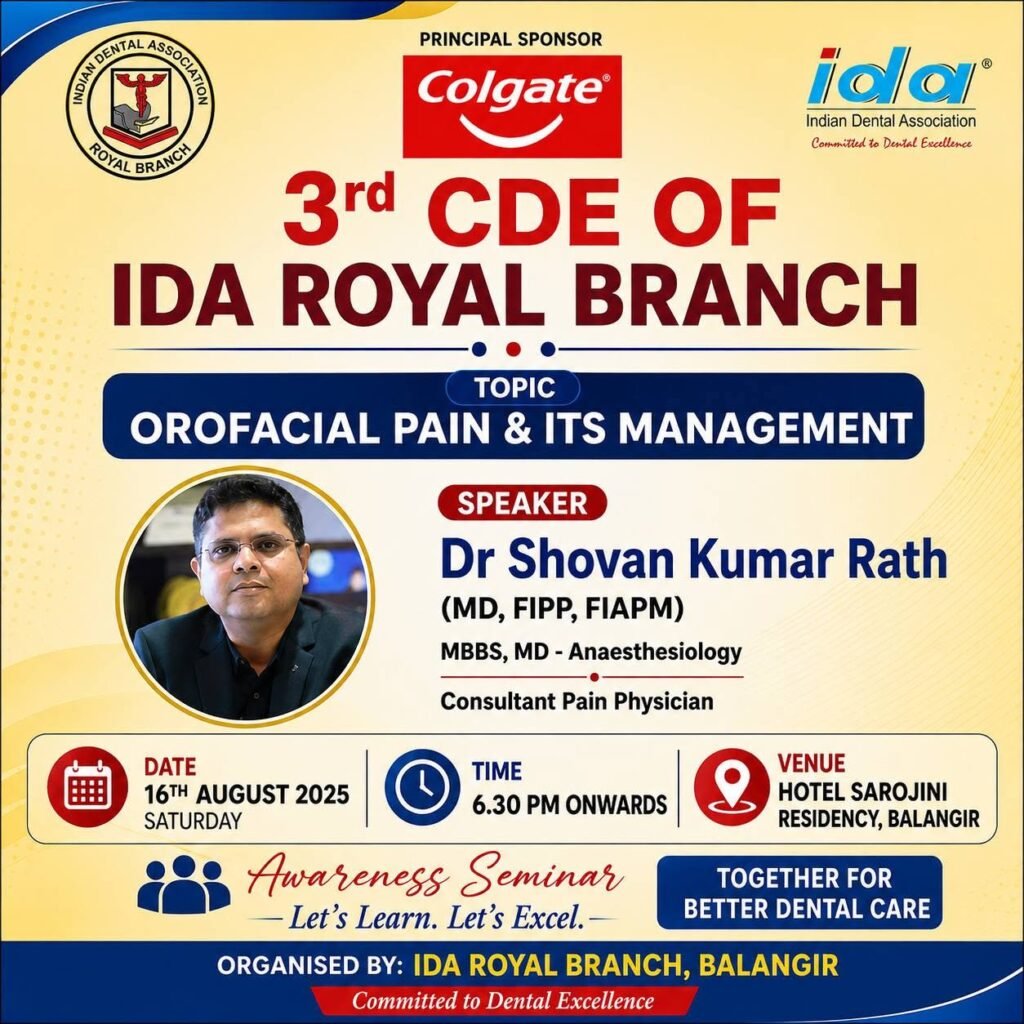
Orofacial Pain & Its Management is an important aspect of modern dental and healthcare practice, particularly when patients experience persistent or complex pain involving the mouth, jaw, face and surrounding structures. Proper understanding of orofacial pain can help dental professionals recognise different pain presentations, evaluate patients carefully and consider appropriate management approaches.
To create greater awareness and improve understanding among dental professionals, the Indian Dental Association (IDA), Royal Branch, Balangir, organised a CME and Awareness Seminar focused on Orofacial Pain & Its Management.
The academic session brought together dental professionals for an insightful and informative discussion on the recognition, evaluation and modern management of orofacial pain. The programme provided an excellent opportunity for participants to enhance their professional knowledge and understand the importance of a multidisciplinary approach to pain management.
Understanding Orofacial Pain
Orofacial pain refers to pain experienced in the oral and facial region and may involve structures such as the teeth, jaws, muscles, joints and surrounding areas. Because pain in this region can have different underlying causes, careful clinical assessment is an important part of patient management.
The seminar on Orofacial Pain & Its Management focused on increasing awareness about the challenges associated with identifying and managing patients with persistent or complex pain. Through academic discussion and professional interaction, participants had the opportunity to explore modern perspectives on pain evaluation and care.
For dental professionals, developing a clear understanding of orofacial pain is valuable for improving communication with patients and supporting appropriate clinical decision-making. Recognising pain patterns and understanding when a multidisciplinary approach may be useful can contribute to a more comprehensive approach to patient care.
Importance of Orofacial Pain Management
Effective Orofacial Pain & Its Management requires attention to the individual needs of each patient. Persistent pain can affect a person’s daily activities, comfort and overall quality of life. This makes awareness, appropriate evaluation and patient-centred care important components of modern dental practice.
The CME highlighted the importance of improving professional awareness about orofacial pain and its management. It encouraged participants to look beyond a single clinical perspective and consider the broader factors that may be associated with complex pain conditions.
A multidisciplinary approach can be particularly valuable when pain involves multiple structures or requires assessment from different healthcare perspectives. Collaboration among relevant healthcare professionals can support a more coordinated approach to patient evaluation and management.
Modern Approaches to Orofacial Pain
The field of orofacial pain management continues to develop with advances in clinical knowledge and healthcare practice. Academic programmes such as this CME provide dental professionals with opportunities to stay informed about evolving approaches and strengthen their understanding of patient care.
The session encouraged participants to learn more about the recognition and evaluation of orofacial pain while discussing modern approaches to its management. Such educational programmes also create an environment where professionals can share experiences, discuss clinical challenges and develop a deeper understanding of complex pain presentations.
The seminar therefore served not only as an awareness programme but also as an important academic platform for continuing professional learning.
Multidisciplinary Approach to Pain Care
One of the important aspects of Orofacial Pain & Its Management is recognising that complex pain may require a broader healthcare perspective. Depending on the individual situation, patient evaluation may involve consideration of dental, muscular, joint-related and other contributing factors.
A multidisciplinary approach encourages healthcare professionals to work together when appropriate, helping provide comprehensive attention to the patient’s concerns. The CME highlighted the value of professional collaboration and knowledge sharing in improving awareness and understanding of orofacial pain.
Such discussions can help dental professionals appreciate the importance of detailed patient assessment and personalised management rather than relying on a single approach for every patient.
CME and Awareness Seminar by IDA Royal Branch, Balangir
The Indian Dental Association (IDA), Royal Branch, Balangir, organised this CME and Awareness Seminar to promote continuing education and awareness among dental professionals. The programme created an opportunity for participants to engage in meaningful academic discussion and explore contemporary perspectives related to orofacial pain.
The event brought dental professionals together with a shared objective of enhancing knowledge and promoting better understanding of pain management. The academic interaction also reinforced the importance of continuous professional development in modern dentistry.
By focusing on Orofacial Pain & Its Management, the programme addressed an important area of dental healthcare and encouraged professionals to further understand the recognition, evaluation and management of complex pain.
Promoting Better Patient Care
Awareness and education are essential for improving the way healthcare professionals approach persistent or complex pain. Greater knowledge of orofacial pain can support better patient communication, careful evaluation and appropriate management planning.
The CME served as a reminder of the importance of continuous learning in dentistry. Through academic programmes, dental professionals can strengthen their knowledge, exchange ideas and remain aware of evolving approaches to patient care.
The focus on Orofacial Pain & Its Management reflects the growing importance of comprehensive pain care within modern dental practice. Educational initiatives like this can contribute to greater professional awareness and ultimately support a more informed approach to patient management.
Conclusion
The CME and Awareness Seminar on Orofacial Pain & Its Management, organised by the Indian Dental Association (IDA), Royal Branch, Balangir, was a valuable academic initiative bringing dental professionals together to learn, discuss and explore modern approaches to pain management.
The programme highlighted the importance of recognising orofacial pain, understanding the need for appropriate evaluation and appreciating the role of multidisciplinary care in managing complex pain.
Through continued education and awareness, dental professionals can strengthen their knowledge and contribute to better patient-centred care.
Knowledge. Awareness. Better Patient Care.
Orofacial Pain & Its Management remains an important area of modern dental practice, and continued academic discussion can help promote greater awareness and understanding among healthcare professionals.
