
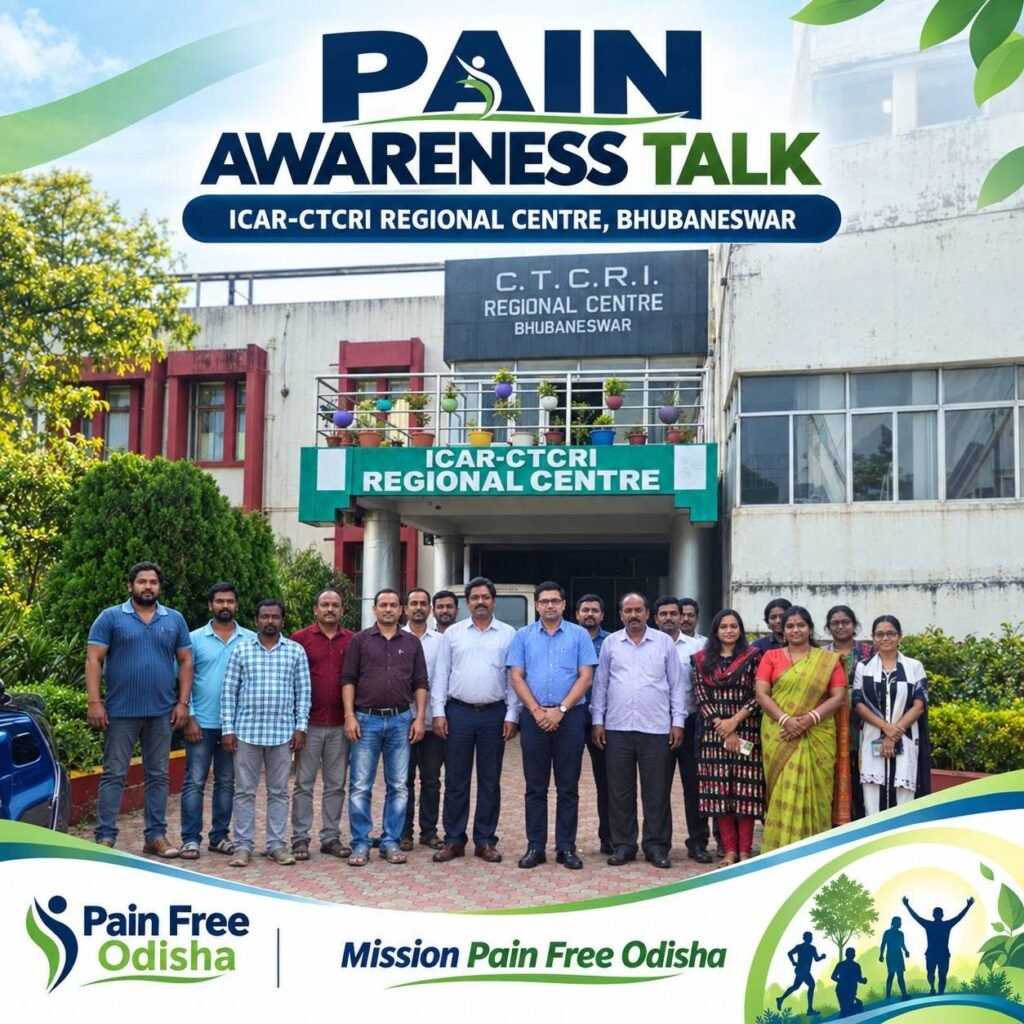
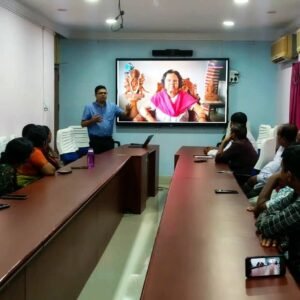
Pain Awareness Talk begins with awareness, education, and meaningful conversations about pain. A meaningful Pain Awareness Talk was conducted at ICAR-CTCRI Regional Centre, Bhubaneswar as part of the mission of Pain Free Odisha, focusing on creating greater awareness about pain, its impact on quality of life, and the importance of timely evaluation and appropriate treatment.
Pain is one of the most common health experiences that people can encounter during different stages of life. It may occur following an injury, illness, medical procedure, physical strain, or as part of a longer-term health condition. While some pain may be temporary, persistent or recurring pain can affect everyday activities and may require appropriate clinical evaluation.
A Pain Awareness Talk provides an opportunity to discuss these issues in a simple and accessible manner. It can help people understand that pain is not just a physical sensation but an experience that can influence mobility, sleep, concentration, work, social participation, and overall quality of life.
The session at ICAR-CTCRI Regional Centre, Bhubaneswar, was part of the broader effort to encourage people to understand pain and approach pain management responsibly.
Understanding the Importance of a Pain Awareness Talk
A Pain Awareness Talk can play an important role in health education. Many people experience pain but may not always know why it occurs, how different types of pain can vary, or when professional evaluation may be appropriate.
Awareness can help bridge this information gap.
Pain can have different causes and characteristics. Headaches, back pain, neck pain, joint pain, muscle pain, nerve-related pain, and pain associated with chronic health conditions may require different approaches.
Therefore, there is no single solution that can be applied to every person experiencing pain.
Health awareness should encourage people to understand their symptoms, avoid unnecessary assumptions, and seek professional medical advice when appropriate.
The purpose of a Pain Awareness Talk is not to encourage self-diagnosis. Instead, it is to promote informed conversations and responsible healthcare decisions.
Pain Awareness Talk at ICAR-CTCRI Regional Centre, Bhubaneswar
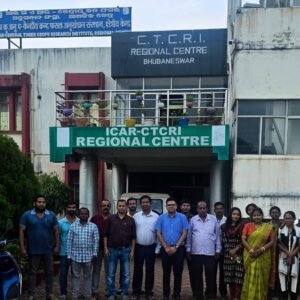
The Pain Awareness Talk at ICAR-CTCRI Regional Centre, Bhubaneswar, represented an opportunity to bring pain-related health education into a professional and institutional environment.
According to the official ICAR-CTCRI website, the institute has a Regional Centre at Bhubaneswar, Odisha, which was established in 1976 and serves the needs of eastern India.
Professional institutions and workplaces can be valuable settings for health awareness because people may experience physical discomfort or pain associated with their daily routines, work patterns, posture, repetitive activities, or other health factors.
An awareness session creates an opportunity for participants to learn more about pain and understand why persistent symptoms should receive appropriate attention.
The session also contributed to the broader mission of Pain Free Odisha, which focuses on pain awareness and pain management. The organisation describes its work as including awareness among healthcare professionals and the public about pain management approaches.
Pain and Its Impact on Quality of Life
Pain can influence much more than physical comfort.
When pain persists, it may affect sleep, movement, concentration, productivity, recreation, and social activities. People may reduce their normal activities because certain movements or tasks become uncomfortable.
In some situations, ongoing pain can also affect emotional wellbeing.
This is why understanding pain requires more than simply asking how severe the symptom feels. Healthcare professionals may also consider how pain affects daily activities and overall functioning.
For example, someone with persistent back pain may experience difficulty sitting, standing, walking, working, or sleeping. Another person with a different condition may experience pain that affects concentration or physical activity in other ways.
The experience of pain is individual, which is why assessment and management should also be individualised.
Why Timely Evaluation Matters
One of the key messages of pain awareness is the importance of timely evaluation when pain becomes persistent, recurrent, unexplained, or disruptive to everyday life.
Not every episode of pain requires extensive medical intervention. Some short-term pain can improve as an injury or illness resolves.
However, pain that continues longer than expected or repeatedly interferes with normal activities may deserve professional attention.
A qualified healthcare professional can consider the symptoms, medical history, physical findings, and other relevant factors before determining whether further assessment or treatment is appropriate.
Timely evaluation may also help people avoid relying solely on assumptions, online information, or advice from people without appropriate medical training.
Understanding Different Types of Pain
Pain can occur through different mechanisms and may have different underlying causes.
Acute Pain
Acute pain generally develops over a relatively short period and may occur following an injury, illness, procedure, or other identifiable event.
It can serve as an important warning signal that something in the body requires attention.
Chronic Pain
Chronic pain generally refers to pain that persists or recurs over an extended period. It can affect physical functioning and quality of life.
Persistent pain may involve several contributing factors, and its management may require a broader approach than simply treating a single symptom.
Nerve-Related Pain
Pain associated with nerve involvement can sometimes feel different from other forms of pain. People may describe sensations such as burning, tingling, numbness, or electric-like discomfort.
The appropriate management depends on the underlying condition and clinical assessment.
Understanding these differences is one reason why pain education is valuable.
Pain Should Not Simply Be Ignored
Pain awareness does not mean that every pain symptom should cause concern. Instead, it encourages people to pay attention to their health.
People sometimes become accustomed to persistent discomfort and begin treating it as a normal part of their daily routine.
However, ongoing pain can sometimes indicate an underlying condition that deserves assessment.
Rather than automatically accepting persistent pain or attempting to diagnose it independently, people can consider discussing concerning symptoms with an appropriate healthcare professional.
This balanced approach allows individuals to take their health seriously without creating unnecessary fear.
The Role of Pain Education
Pain education can help address common misconceptions.
Some people may believe that pain is always unavoidable or that nothing can be done about persistent symptoms. Others may assume that one treatment will work for every type of pain.
Both approaches can oversimplify a complex health issue.
Pain education can help people understand that:
- Different types of pain can have different causes.
- Persistent pain may require professional evaluation.
- Treatment should be based on individual assessment.
- Self-diagnosis can be unreliable.
- Pain management may involve more than one approach.
- Quality of life and daily functioning are important considerations.
A Pain Awareness Talk provides a useful setting for sharing these principles.
Pain Management Requires an Individualised Approach
There is no universal treatment for pain.
Depending on the individual condition, pain management may include lifestyle measures, physical rehabilitation, medicines, psychological support, or selected interventional approaches.
For appropriate patients, interventional pain management may form part of a broader treatment plan following clinical assessment.
The choice of treatment depends on factors such as the suspected cause of pain, duration, severity, medical history, and overall health.
This is why professional evaluation is important before selecting a treatment approach.
Awareness should therefore focus on understanding pain rather than promising a particular outcome.
Modern Pain Management and Quality of Life
Modern pain management increasingly considers the overall impact of pain on a person’s life.
Reducing discomfort can be one goal, but healthcare professionals may also consider mobility, independence, sleep, work, physical activity, and daily functioning.
For some patients, a multidisciplinary approach may be appropriate. Different healthcare professionals may contribute depending on the complexity and nature of the condition.
This broader perspective can be particularly important when managing persistent pain.
The objective is to develop an approach that is appropriate for the individual rather than applying the same strategy to everyone.
Workplace and Institutional Pain Awareness
Pain awareness can be especially relevant in professional environments.
People may spend extended periods sitting, standing, working at computers, performing repetitive tasks, or engaging in physically demanding activities.
These factors can sometimes contribute to discomfort, although the underlying cause of pain can vary significantly between individuals.
Health awareness programmes can encourage people to pay attention to posture, movement, physical activity, rest, and other aspects of healthy daily routines.
At the same time, persistent symptoms should not automatically be attributed to workplace activity. Professional evaluation may be appropriate when pain continues or affects normal functioning.
Building a Culture of Health Awareness
A strong health-conscious community depends on reliable information and open conversations.
People often receive health information from many sources, including family members, friends, social media, and online platforms. Some information may be useful, while other information may be incomplete or misleading.
Professional awareness sessions provide an opportunity to promote responsible health education.
The Pain Awareness Talk at ICAR-CTCRI Regional Centre, Bhubaneswar, is an example of bringing health education into an institutional environment.
Such initiatives can encourage participants to think about pain more carefully and understand the importance of appropriate medical evaluation.
Pain Free Odisha and the Mission of Awareness
Pain Free Odisha is focused on pain management and pain awareness. Its official website describes the organisation as an interventional pain clinic in Bhubaneswar and highlights its efforts to create awareness among healthcare professionals and the public.
The broader message is that pain deserves understanding.
Awareness can help people recognise that persistent pain may affect quality of life and that professional assessment can help determine possible causes and suitable management options.
Through awareness programmes and educational initiatives, conversations about pain can reach more people across Odisha.
From Awareness to Appropriate Action
Awareness is the beginning of a responsible approach to pain.
If an individual experiences persistent, recurring, or troublesome pain, discussing the symptoms with a qualified healthcare professional may help determine whether further assessment is necessary.
People should avoid assuming that a treatment that worked for another person will necessarily be suitable for them.
Every individual’s condition can be different.
Appropriate pain management should therefore be based on clinical assessment and an understanding of the person’s specific health circumstances.
This approach helps turn awareness into informed healthcare decisions.
Creating a Pain-Aware Odisha
Creating a healthier Odisha requires health awareness across different parts of society.
Schools, workplaces, research institutions, healthcare organisations, families, and community groups can all contribute to better health education.
A Pain Awareness Talk is one way to begin an important conversation.
When people understand that pain can have different causes and that persistent symptoms may deserve professional attention, they can become more informed about their health.
Awareness can also help reduce misconceptions and encourage people to approach pain management responsibly.
The vision of a Pain-aware Odisha is therefore connected with education, reliable information, professional guidance, and community participation.
Continuing the Conversation About Pain
One awareness programme cannot answer every question about pain. However, each conversation can contribute to a larger culture of health education.
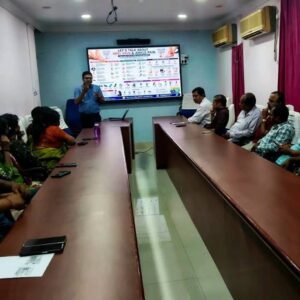
The Pain Awareness Talk at ICAR-CTCRI Regional Centre, Bhubaneswar, provided an opportunity to discuss the importance of understanding pain, its potential effect on quality of life, and the role of timely evaluation.
Continued health awareness initiatives can help make pain-related information more accessible to different communities.
The more people understand about pain, the better prepared they may be to recognise when professional advice could be appropriate.
A Meaningful Step Toward Better Pain Awareness
The collaboration and participation of professional institutions can make health awareness programmes more meaningful.
The ICAR-CTCRI Regional Centre in Bhubaneswar provides an important institutional setting for knowledge-sharing and professional engagement. Its official website identifies Bhubaneswar as the location of one of ICAR-CTCRI’s regional centres.
A Pain Awareness Talk in such an environment creates an opportunity to connect health education with the everyday experiences of professionals and communities.
It also reinforces an important message: understanding pain is an important part of taking health seriously.
Conclusion
The Pain Awareness Talk at ICAR-CTCRI Regional Centre, Bhubaneswar, was a meaningful initiative focused on creating awareness about pain, its impact on quality of life, and the importance of timely evaluation and appropriate treatment.
Pain is a complex experience, and every individual’s symptoms and circumstances can be different. Persistent or recurring pain should not simply be ignored, while treatment decisions should be based on appropriate professional assessment.
Through initiatives such as this Pain Awareness Talk, Pain Free Odisha continues its effort to promote better understanding of pain and encourage responsible approaches to pain management.
Awareness is the first step toward informed healthcare.
Let’s understand pain. Let’s address it. Let’s restore life.
Pain Free Odisha — Relieving Pain. Restoring Life.
